
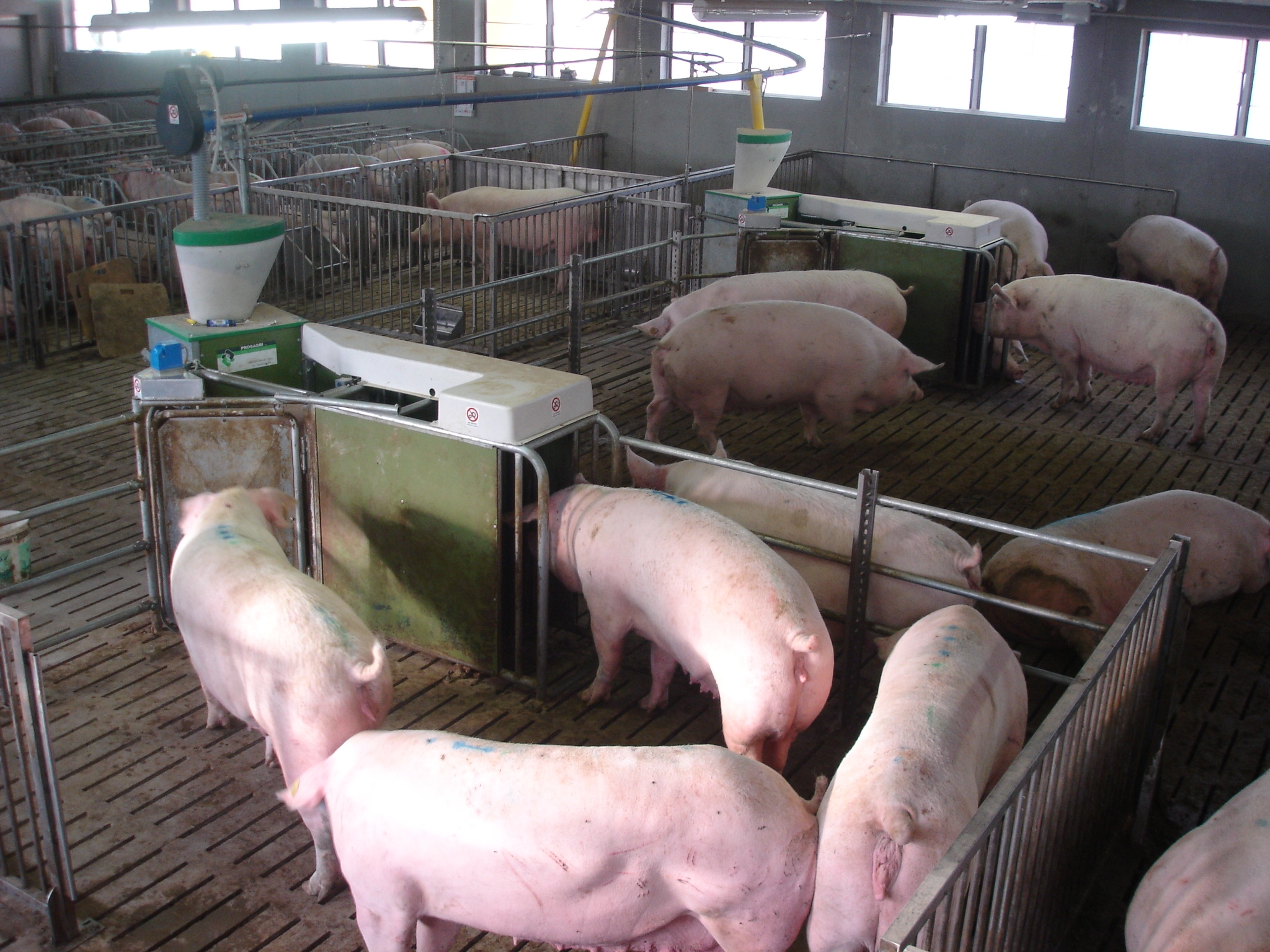
Oggi buona parte degli allevatori europei sanno che stabulare le scrofe in gruppo presenta una serie di vantaggi non indifferente: semplicità costruttiva e conseguente diminuzione dei costi fissi; libertà di movimento della scrofa, che permette un importante ginnastica funzionale e la ricerca delle zone più confortevoli all’interno del box.
L’allevamento delle scrofe in gruppo, associato all’alimentazione elettronica individuale, pone gli animali in una situazione di maggior benessere. Gli allevatori che sono giunti a tale sistema di stabulazione, anche partendo da problemi e da presupposti differenti, generalmente hanno trovato in esso la soluzione ideale.
Vantaggi:
Questa tecnica d’allevamento presenta parecchi vantaggi, in particolare la possibilità di stabilire la razione capo per capo, in relazione alla taglia, all’età, allo stato produttivo ecc.
Il permettere alle scrofe l’esercizio muscolare ha il risultato di evitare il parto languido, favorire la nascita di suinetti di notevole peso, annullare quasi la nascita dei mummificati. Importantissima poi è la cessazione delle lesioni podali ed articolari.
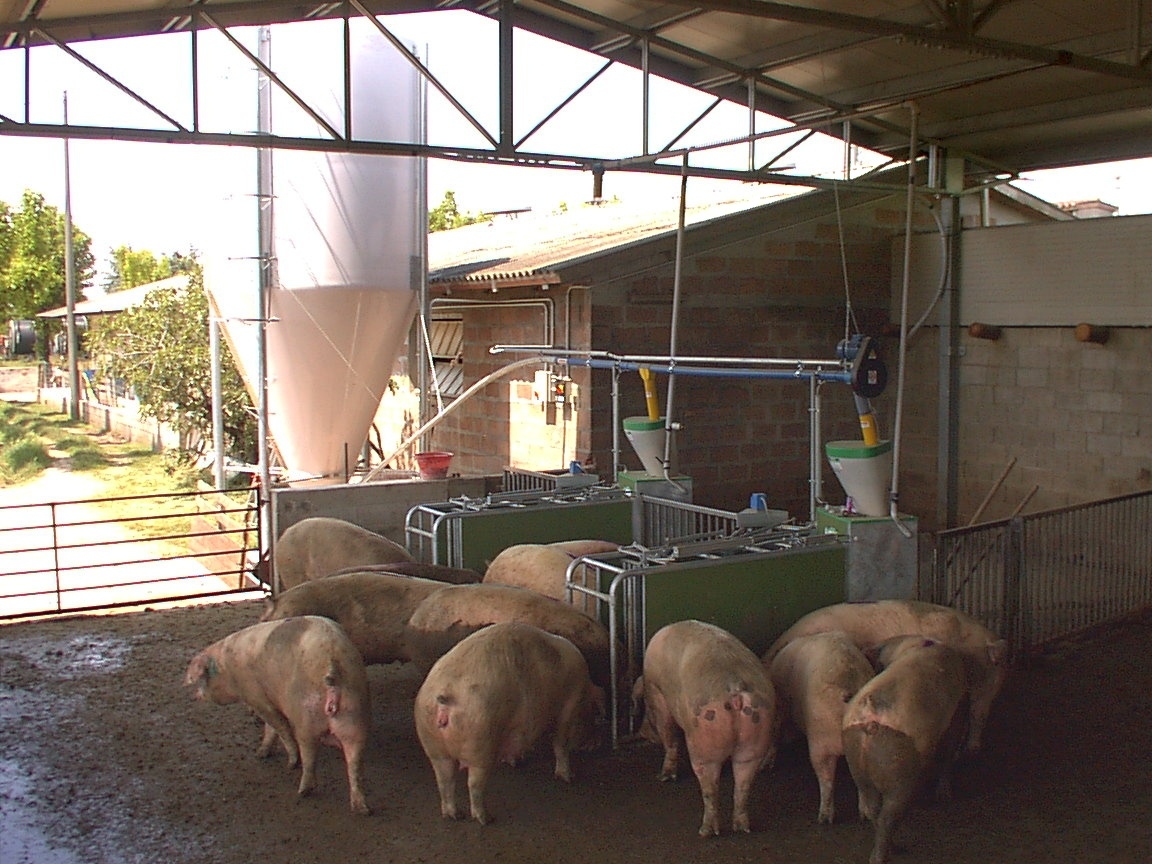
Inoltre, il sistema è adattabile ad ogni tipo di edificio, sia chiuso sia sotto tettoie. Generalmente basta dotare il fabbricato preesistente di divisori interni appropriati e posizionare correttamente gli autoalimentatori per vederlo funzionare al meglio.
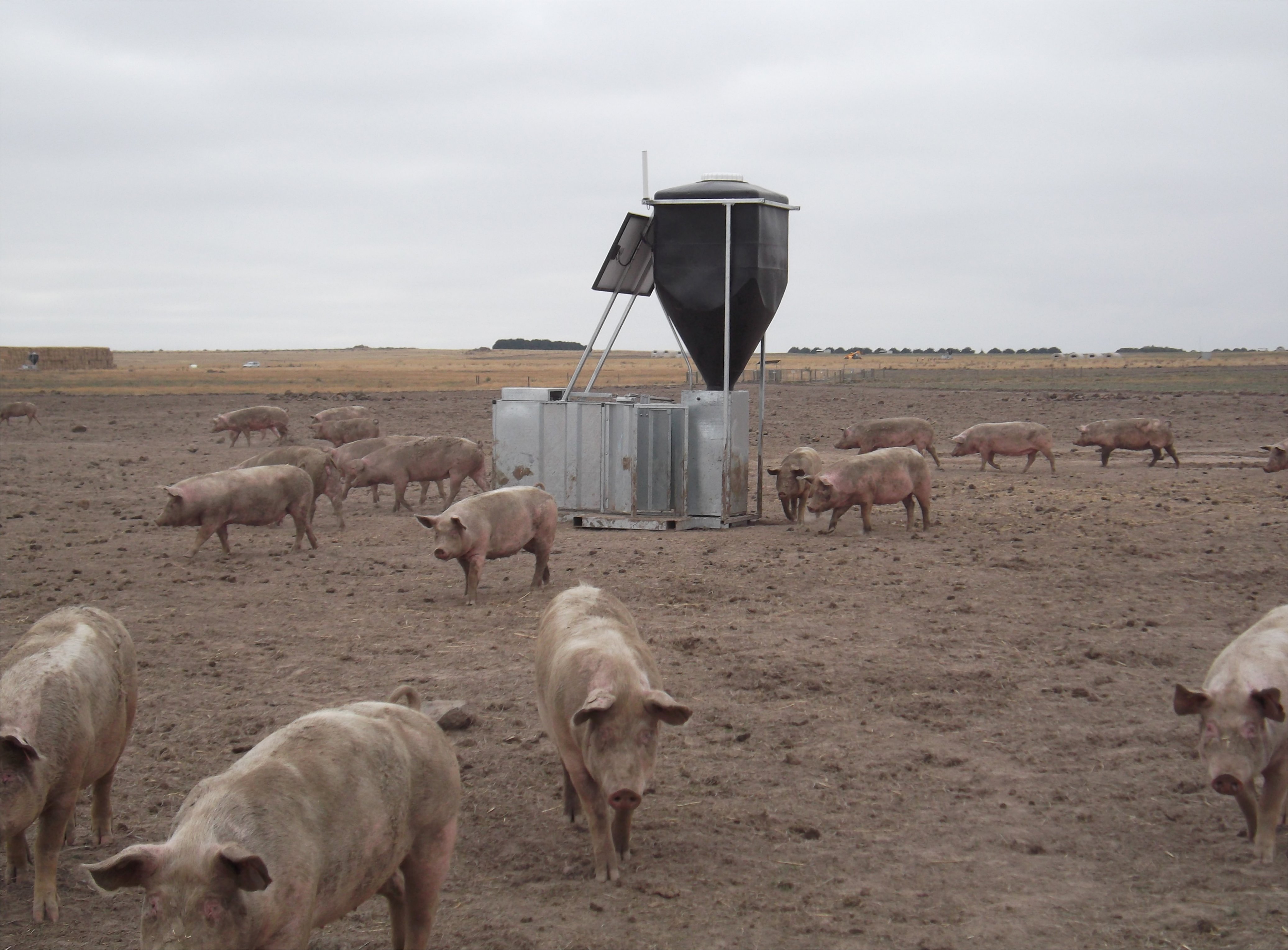
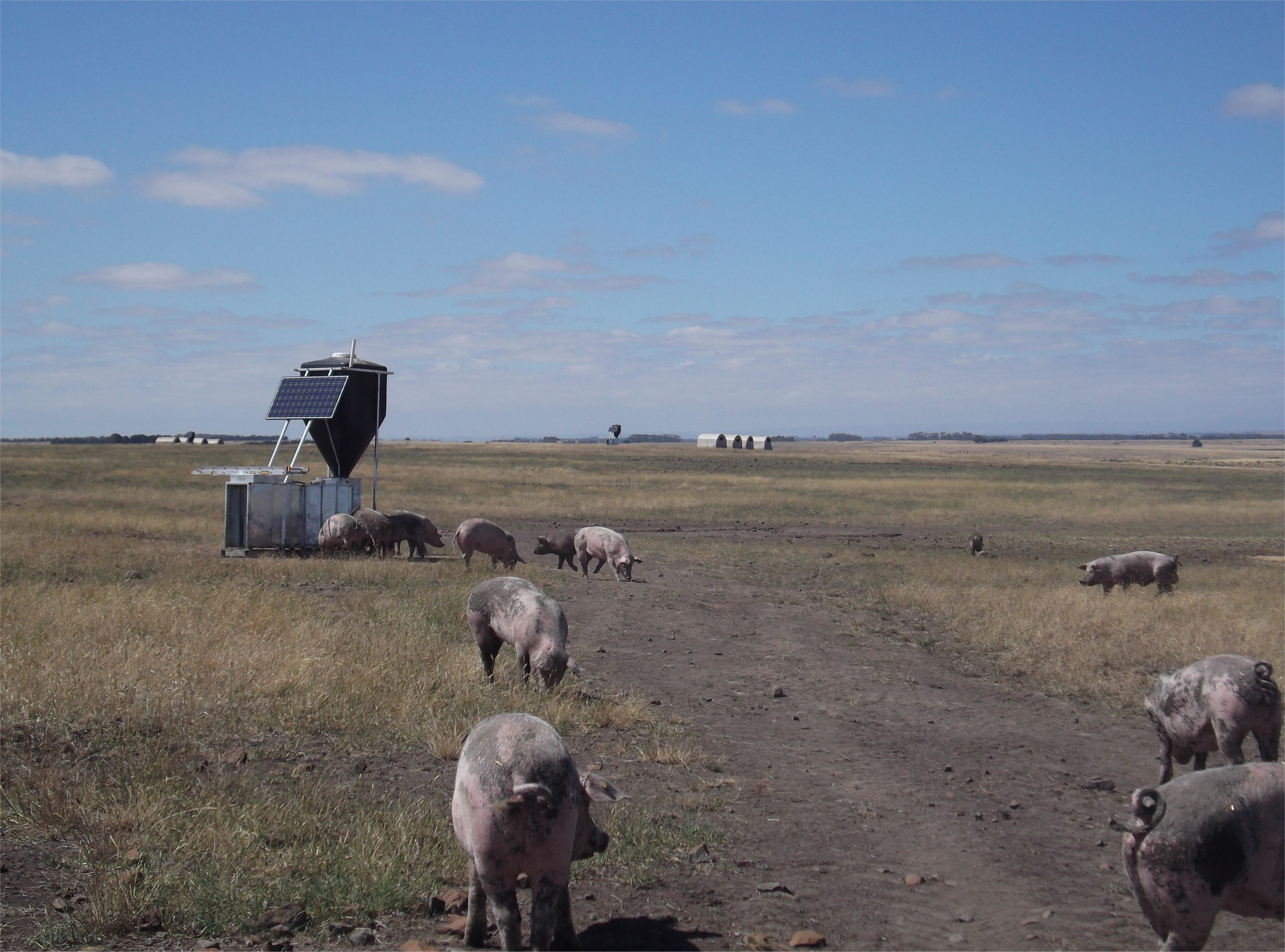
Grazie alle nuove tecnologie wireless e all’utilizzo di pannelli solari, è possibile alimentare in maniera automatica e computerizzata anche scrofe allevate allo stato semi-brado in aree prive di connessione elettrica.
Il costo totale di un ricovero per fattrici in gravidanza, è inferiore a quello di un edificio appositamente costruito per la stabulazione a posta fissa. Vi è poi la possibilità di mantenere le scrofe in edifici non chiusi, e comunque senza controllo del microclima interno: niente ventilatori e riscaldamento, con tutti i loro costi.
Alcuni dati:
Negli allevamenti italiani che utilizzano il nostro sistema, abbiamo una media di suinetti svezzati a 7,4 Kg. Raggiungono il peso di 30 Kg. in 70 giorni. L’incremento medio giornaliero si aggira intorno Kg. 0,56 con un indice di conversione del 1,63. I parti scrofa anno sono circa 2,35. La percentuale di nati morti è il 2,6%. Nati vivi per parto 11. Morti in sala parto 8,6%. Numero svezzati per parto 9,85. Numero suinetti svezzati per scrofa all’anno 23,1.
E’ stato condotto uno studio presso l’Istituto di Rosmalen (Olanda), che metteva a confronto sistemi di tre gruppi di allevamento, gabbie a libero accesso, alimentazione trickle (distribuzione mangime lenta) ed ESF (alimentazione elettronica per scrofe), ad un sistema di allevamento individuale (gabbie).
Nella valutazione economica furono quantificati i seguenti aspetti: utilizzo di alimento, utilizzo di acqua e costi associati alla sistemazione del letame, utilizzo di energia, intervallo svezzamento-inseminazione, manodopera richiesta ed investimento richiesto.
La tabella riassume i risultati riscontrati.
|
Gabbie |
Gabbie a libero accesso |
ESF |
Trickle feeder |
|
|
N° medio scrofe |
86 |
85 |
89 |
88 |
|
Investimento 170 scrofe (USD/scrofa) |
900 |
1.160 |
885 |
940 |
Fonte: Comparazione di 4 sistemi di allevamento per scrofe Rosmalen Institute, Report P 1.171
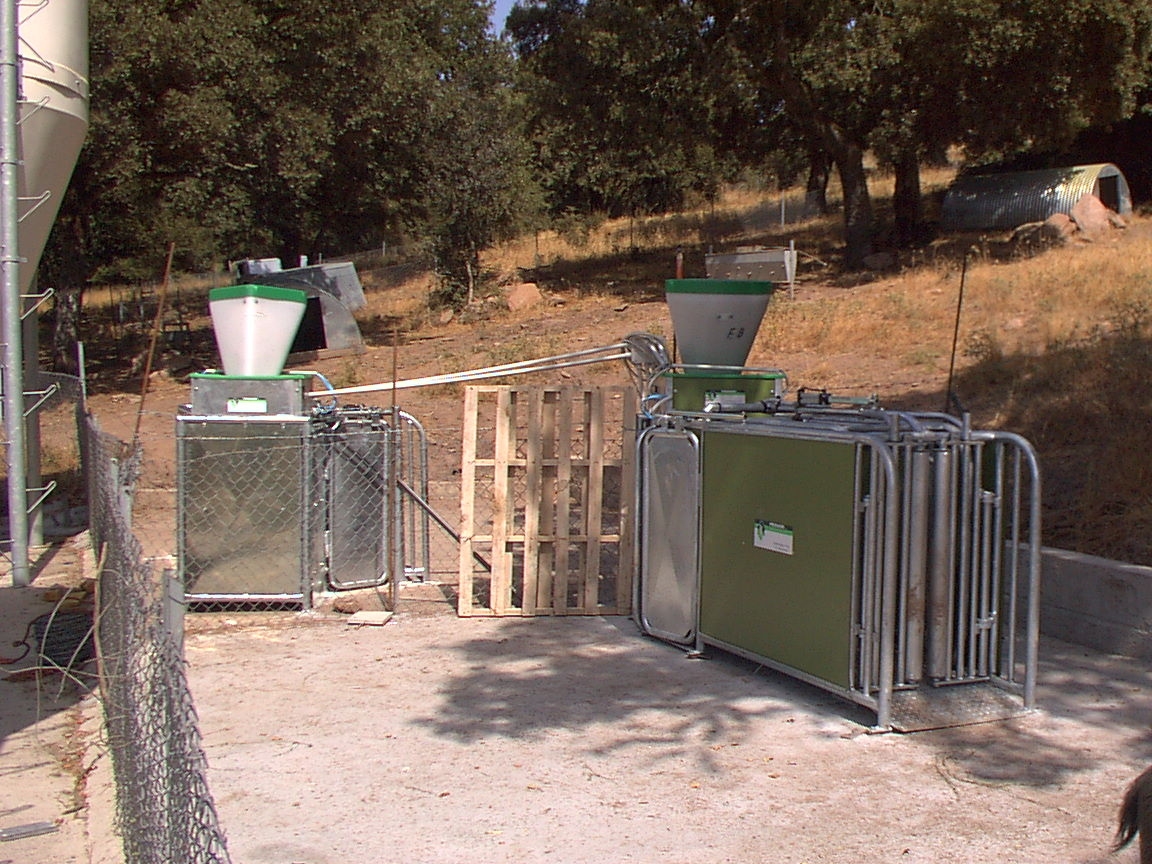
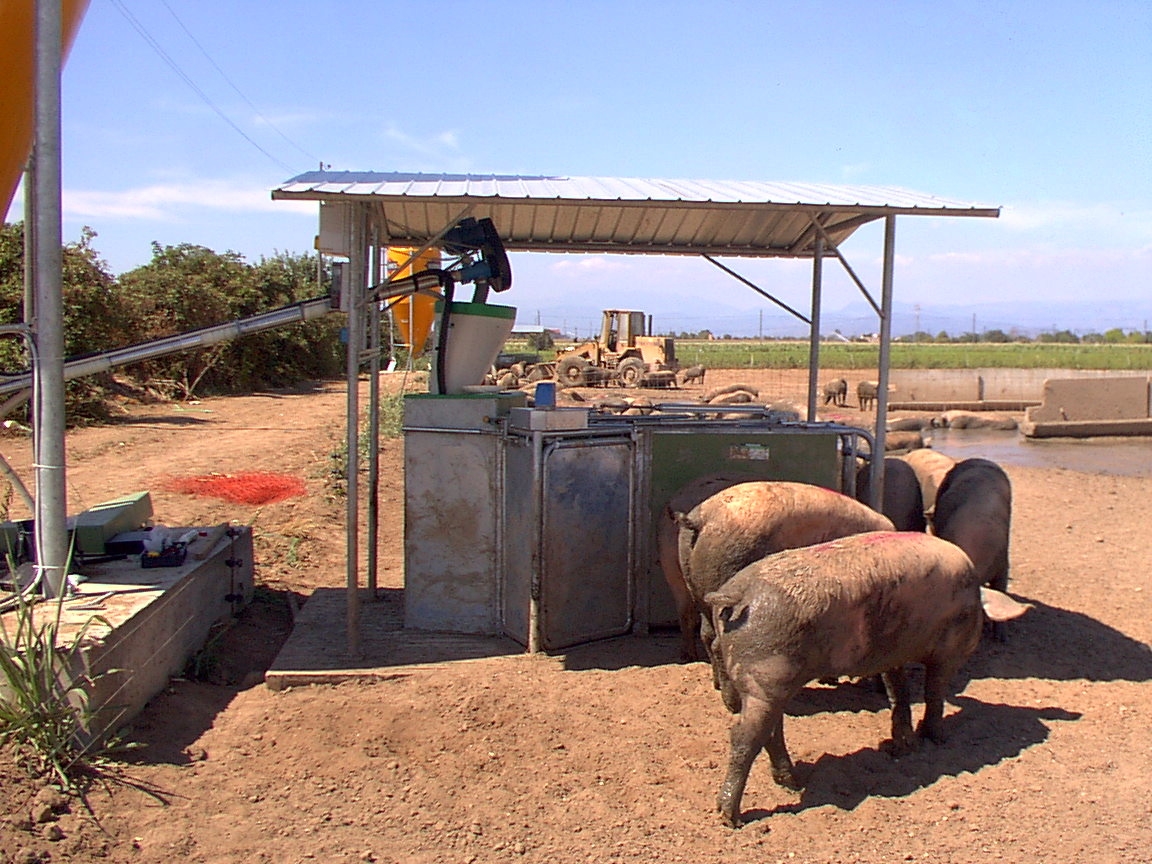
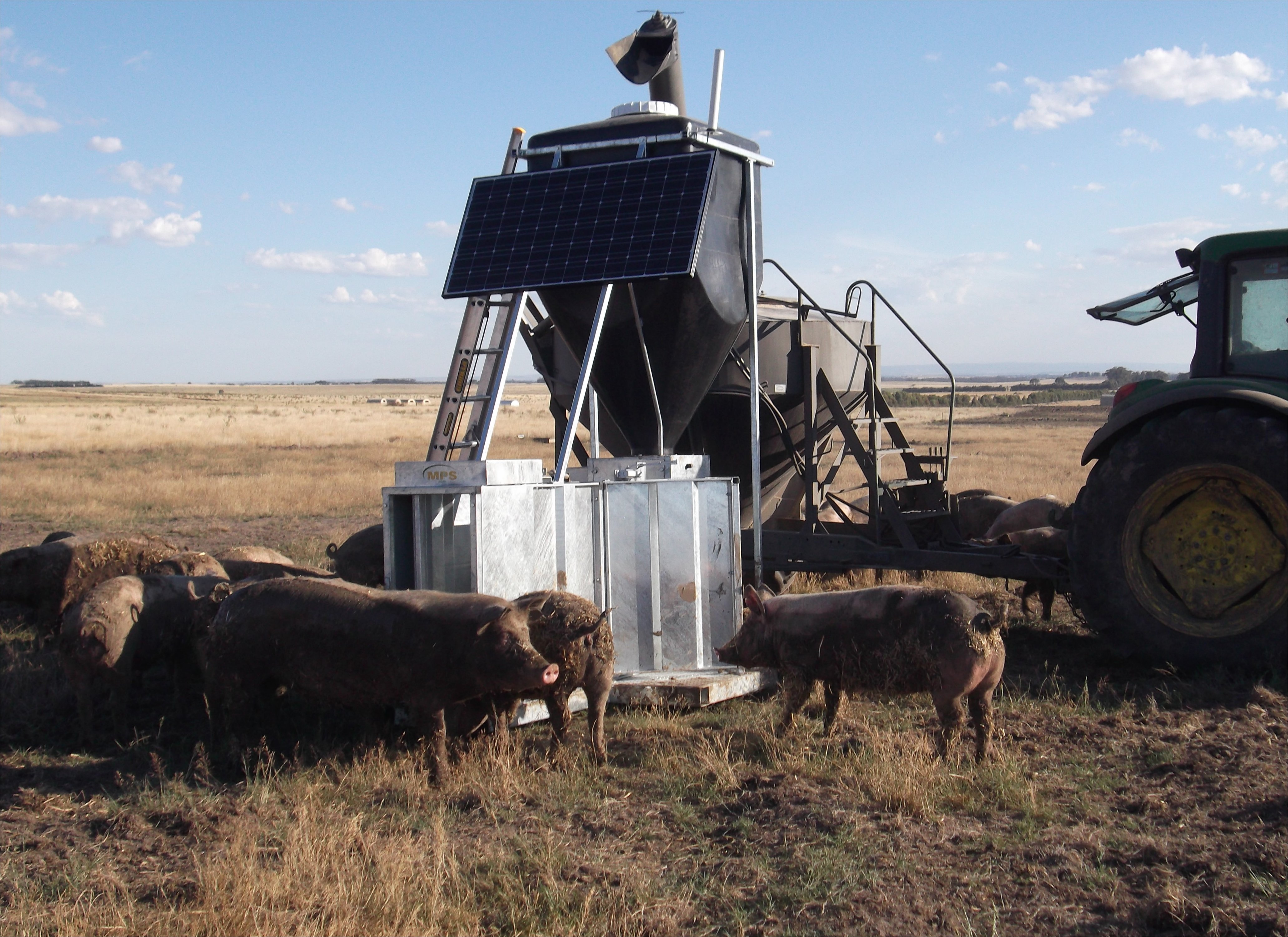
Nella stabulazione a gruppi con alimentazione individuale ogni scrofa è fornita di un trasponder che permette al sistema di riconoscerla. Questo transponder, che può essere inserito sottocute, o posto nell’orecchio come una marca auricolare, recepisce un segnale inviato da un’unità ricetrasmittente posta nell’autoalimentatore e lo riflette modificato. L’autoalimentatore è una gabbia d’acciaio zincata a fuoco o in acciaio inox dove la scrofa riceve la propria razione individuale impostata sul computer, protetta dalle aggressioni degli atri animali del gruppo.
Il nostro sistema permette un’amplissima gamma di soluzioni: mangime pellettato o farina, a secco o con aggiunta d’acqua nella percentuale desiderata. Possibilità di fornire il pasto in un’unica volta o in diverse fasi. Tutto ciò può essere programmato individualmente per ogni capo.
I cancelli della stazione di alimentazione (ESF) sono tutti azionati direttamente dall’animale che, entrando, aziona leveraggi che bloccano le porte, rendendo impossibile l’ingresso ad altri animali.
Il computer fornisce una lista di tutti gli animali che non hanno consumato il pasto, o parte dello stesso, dando la possibilità all’allevatore di verificare quale sia la natura del problema.
Dopo aver consumato il pasto, la scrofa, che non può coricarsi nella stazione a causa di un sistema di anticoricamento e disturbata dalla porta interna, esce dalla porta laterale. Il computer può memorizzare automaticamente le date di selezione dell’animale per eventuali controlli di gestazione o di imminenza di parto. In questo caso il computer quando riconosce l’animale da selezionare blocca la normale porta di uscita ed apre la “porta di selezione” che introduce l’animale in un box a parte, dove l’allevatore può facilmente eseguire controlli sull’animale o prelevarlo per portarlo in sala parto.
Ogni alimentatore può servire 40/60 scrofe, se il gruppo è più ampio è sufficiente aumentare il numero degli autoalimentatori per mantenere costante il rapporto animali/stazione. I nostri computer controllano, a seconda del modello, da 12 a 64 autoalimentatori e da 500 a 3000 animali.
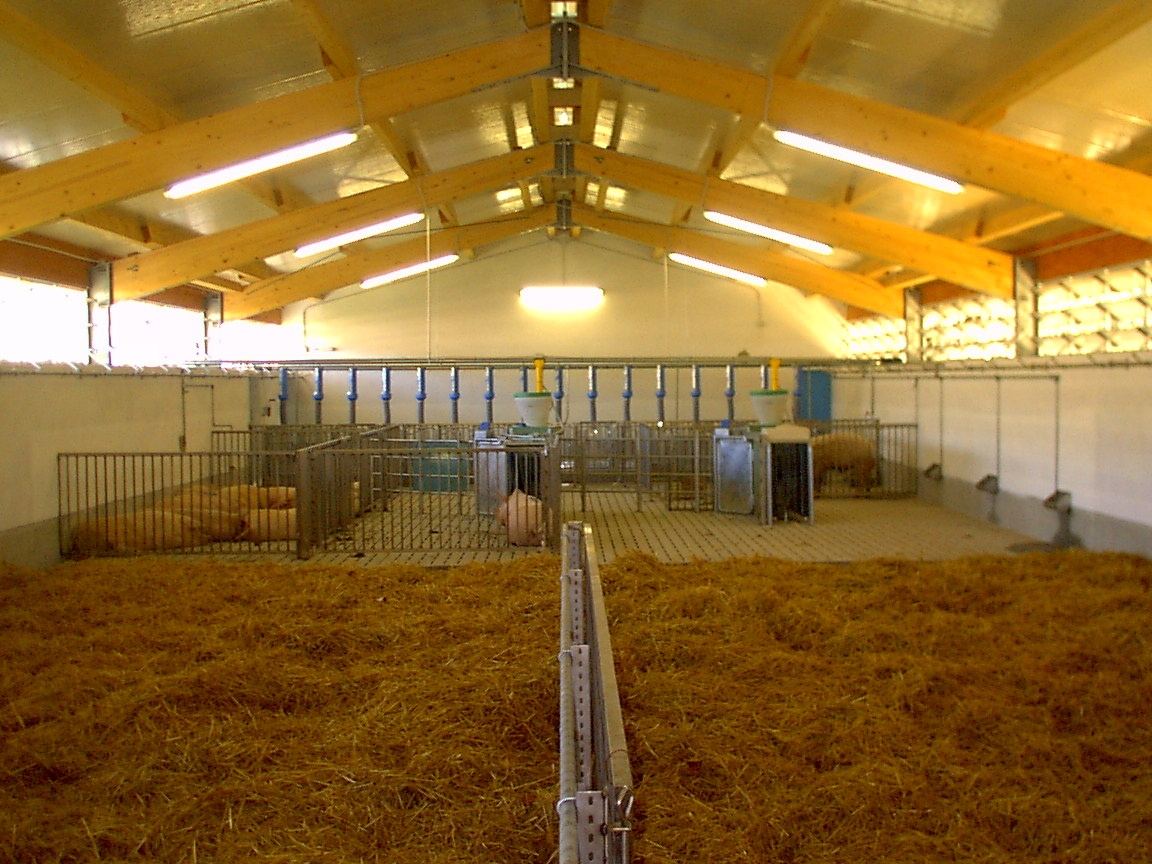
Si può prevedere una stabulazione solo su grigliato, solo su lettiera in paglia o zona alimentazione su grigliato e zona di riposo su paglia.
Posizionando un box con il verro nella zona gestanti è possibile registrare la frequenza con cui le scrofe si presentano davanti al verro (boar visit). Tale dato abbinato all’assenza del comportamento alimentare, è un importante elemento per valutare lo stato di estro della scrofa.
Nella stessa categoria vedi anche:
Выращивание свиноматок в группе совместно с электронным индивидуальным питанием приводит животных в наиболее комфортные условия. Скотоводы, которые пришли к такой системе содержания, как правило, нашли в ней идеальное решение, хотя изначальные стимулы и проблемы были у каждого свои.
Преимущества:
Такая техника выращивания имеет множество преимуществ, в частности, возможность установки рациона для каждой головы в зависимости от размера, возраста, степени производительности и проч.
Предоставление для свиноматок возможности для мышечных упражнений означает отсутствие изнуряющих родов, благоприятно влияет на рождение поросят значительного веса, почти устраняет появление мумифицированных плодов. Также очень важное значение имеет устранение травм стоп и конечностей.
Система подходит под любой тип здания, как закрытого типа, так и под навесом. Обычно достаточно оборудовать существующее здание соответствующими внутренними перегородками и правильно расположить автоматические раздатчики корма.
Благодаря новым беспроводным технологиям и использованию солнечных панелей имеется возможность автоматического компьютеризированного кормления свиноматок и на полусвободном выпасе в местах, лишенных электричества.
Общая стоимость отделения для беременных производительниц ниже стоимости здания, специально построенного для неподвижного загона. Также существует возможность содержания свиноматок в незакрытых зданиях без контроля за внутренним микроклиматом: никаких вентиляторов и отопления, а также и расходов на них.
Некоторые данные:
На итальянских фермах, которые используют нашу систему, в среднем поросята отнимаются при весе в 7,4 кг. Достигают веса в 30 кг за 70 дней. Средняя дневная прибавка в весе равна 0,56 кг с индексом конверсии 1,63. Свиноматка в год рожает 2,35 раз. Процент мертворожденных составляет 2,6%. Живорожденные для каждого опороса 11. Умершие в родильном отделении 8,6%. Количество отъемышей в каждом опоросе 9,85. Количество поросят-отъемышей на каждую свиноматку в год равно 23,1.
В институте Rosmalen (Голландия) было проведено исследование, целью которого являлось сопоставление систем трех групп выращивания (в клетках свободного доступа, системы питания trickle (медленное распределение корма) и ESF (электронная система питания для свиноматок) с индивидуальной системой питания (клетки).
В экономическую оценку были включены следующие аспекты: использование корма, использование воды и расходы на размещение навоза, использование электроэнергии, временной промежуток между отъемом и оплодотворением, требуемая рабочая сила и вложения.
В таблице представлены полученные результаты.
|
Клетки |
Клетки свободного доступа |
ESF |
Trickle feeder |
|
|
Среднее к-во свиноматок |
86 |
85 |
89 |
88 |
|
Вложение на 170 свиноматок (USD/свиноматка) |
900 |
1.160 |
885 |
940 |
Источник: Сравнение 4-х систем выращивания свиноматок Rosmalen Institute, Report P 1.171
В групповых загонах с индивидуальным питанием каждая свиноматка снабжена транспондером, благодаря которому ее распознает система. Данный транспондер может вводиться подкожно или в качестве ушной марки, он получает сигнал, направленный от приемопередатчика в автораздатчике, и отражает его модифицированным. Автораздатчик представляет собой клетку из оцинкованной или нержавеющей стали, где свиноматка получает свой индивидуальный рацион, заданный на компьютере. Клетка защищена от агрессии других животных стада.
Наша система позволяет широчайший ряд решений: корм в виде пеллет или муки, сухой или разведенный водой в требуемом соотношении. Возможность подачи корма за один раз или в несколько этапов. Все это можно запрограммировать индивидуально для каждой головы.
Калитки станции питания (ESF) приводятся в действие самим животным, который при входе воздействует на рычажные механизмы блокировки дверей. Это делает невозможным вход других особей.
Компьютер выдает список всех животных, которые не съели корм или съели частично, что позволяет фермеру выявить характер проблемы.
После поглощения корма свиноматка не может лечь на станции из-за системы препятствования лежанию, от воздействия на нее внутренней двери она выходит из боковой калитки. Компьютер автоматически запоминает даты отбора животного для проверок вынашивания или непосредственно перед опоросом. В этом случае компьютер опознает выбранное животное, блокирует обычную выходную дверь и открывает «дверь отбора», которая ведет животное в отдельный бокс, где фермер может легко выполнить проверки или забрать животное для его перевода в родильное отделение.
Каждый раздатчик может обслуживать 40/60 свиноматок. Если стадо более крупное, достаточно увеличить количество автораздатчиков, чтобы поддерживать постоянным соотношение животные/станция. Наши компьютеры, в зависимости от модели, контролируют от 12 до 64 автораздатчиков и от 500 до 3000 голов.
Можно предусмотреть загон только на решетке, только на соломенной лежанке или зону питания на решетке и зону отдыха на соломе.
При размещении бокса с хряком среди беременных свиноматок, можно регистрировать частоту, с которой они предстают перед хряком (функция Boar Visit). Такие данные в комплекте с отсутствием пищевого поведения являются важным элементом для оценки эструса свиноматки.
Nella stessa categoria vedi anche:
Today a large part of European breeders know that stabling sows in group presents a number of considerable advantages: simplicity of construction and consequent reduction of fixed costs; freedom of movement of the sow, which allows an important functional exercise and the search for the most comfortable areas inside the box.Breeding sows in groups, associated with individual electronic feeding, puts animals in a situation of greater well-being. Breeders who have conceived this stabling system, even starting from different problems and assumptions, have generally found that it is the ideal solution.
Advantages:
This farming technique has several advantages, in particular the possibility of determining the ration for each cattle, in relation to its size, age, state productive state, etc…
Allowing muscular exercise to sows has the effect of avoiding prolonged labour, promoting the birth of piglets of considerable weight, almost cancelling the birth of mummified piglets. A very important matter is the cessation of foot and joint lesions.
In addition, the system is adaptable to any type of building, whether indoors or under canopies. Generally it is necessary only to equip the existing building with appropriate interior dividers and properly position the self-feeders to see it working at its best.
Thanks to new wireless technologies and the use of solar panels, it is possible to automatically feed with computerized system and also sows bred in semi-wild state in areas with no electrical connection.
IThe total cost of a shelter for pregnant animals, is less than the cost of a building specially constructed for tie stall stabling. There is also the possibility of keeping sows in not closed buildings and however without internal microclimate control: no fans and heating, with all their costs.
Some data:
In Italian farms that use our system, we have an average of piglets weaned at 7.4 kg. They reach the weight of 30 kg in 70 days. The average daily gain is around 0.56 kg with a conversion ratio of 1.63. The yearly sow deliveries are about 2.35. The percentage of stillbirths is 2.6%. Live births by delivery 11.8. Died in the delivery room 8.6%. Number weaned per litter 9.85. Number of piglets weaned per sow each year 23.1.
A study was conducted at the Institute of Rosmalen (Netherlands), which compared three groups of breeding systems, free access cages, trickle feeding (slow feed distribution), and ESF (electronic feeding for sows), and an individual breeding system (cages).
The economic evaluation quantified the following aspects: use of food, use of water and costs associated with the accommodation of manure, use of energy, weaning-insemination interval, labour demand and investment required.
The table summarizes the results found.
|
Cages |
GFree access cages |
ESF |
Trickle feeder |
|
|
Medium no. of sows |
86 |
85 |
89 |
88 |
|
Investment 170 sows (USD/sow) |
900 |
1.160 |
885 |
940 |
Source: Comparison of 4 farming systems for sows Rosmalen Institute, Report P 1,171
How it works
In group stabling with individual ,each sow is equipped with a transponder that allows the system to recognize it. This transponder, which can be inserted under the skin, or placed in the ear as an ear tag, receives a signal from a transceiver unit located in the self-feeder and reflects it changed. The self-feeder is a steel hot-dip galvanized or stainless steel cage where the sow receives its own individual ration set on the computer, protected from the aggression of other animals in the group.
Our system allows a wide range of solutions: pelleted or flour feed, dry or with water addition in the desired percentage. Possibility to dispense the meal at once or in several stages. All this can be individually programmed for each cattle.
The gates of the feeding station (ESF) are all driven directly by the animal which, upon entering, operates the levers that lock the doors, making it impossible for other animals to enter.
The computer provides a list of all the animals that did not eat the meal, or part thereof, giving the opportunity to the breeder to check what is the nature of the problem.
After eating the meal, the sow, that can not lie down in the station because of a system that prevents laying down and disturbed by the inner gate, it goes out from the side gate. The computer can automatically store the animal selection date for gestation or imminent delivery inspection. In this case, when the computer recognizes the animal to select, it blocks the normal exit gate and opens the “selection gate” which introduces the animal in a box on the side, where the farmer can easily perform checks on the animal or take it to bring it to the delivery room.
Each feeder can serve 40/60 sows, if the group is larger, it is necessary to increase the number of self-feeders to maintain a constant animals/station ratio. Our computers monitor, depending on the model, from 12 to 64 self-feeders and from 500 to 3000 animals.
It can be possible to provide stabling only on grating, only on straw bedding or feeding area on grating and resting area on straw.
Placing a box with the boar in the gestation area it is possible to record the frequency with which sows go in front of the boar (boar visits). This data combined with the absence of feeding behaviour, is an important element to assess the sow estrus state.


